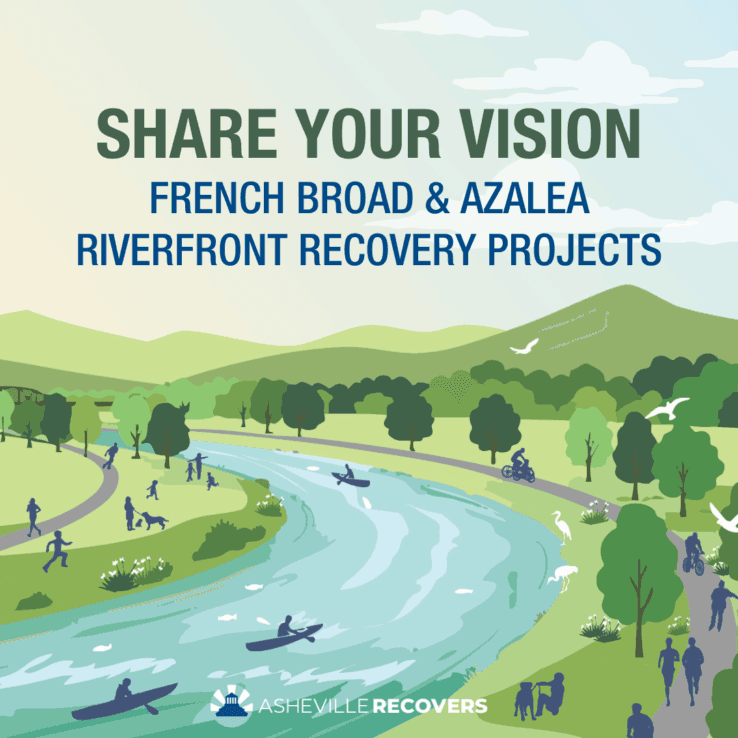
Now it is the time to jump start the Hellbender Regional Trail as part of Asheville’s Helene Recovery. The City of Asheville needs to hear from you. This is our opportunity to voice support for robust investment in greenways and trails that will serve as the backbone of the Hellbender Regional Trail.
We Need Your Voice
There are a few ways to participate:
- Attend the Drop in Open House on Wednesday, Dec. 10th from 6pm – 8pm at Asheville Middle School (211 S French Broad Ave, Asheville, NC 28801)
- Take the Riverfront Park Recovery Survey. The survey is open until Dec. 19th.
- Extend an invite to the Drop in Open House and survey the people in your circles. Greenway and trail expansion requires robust public input.
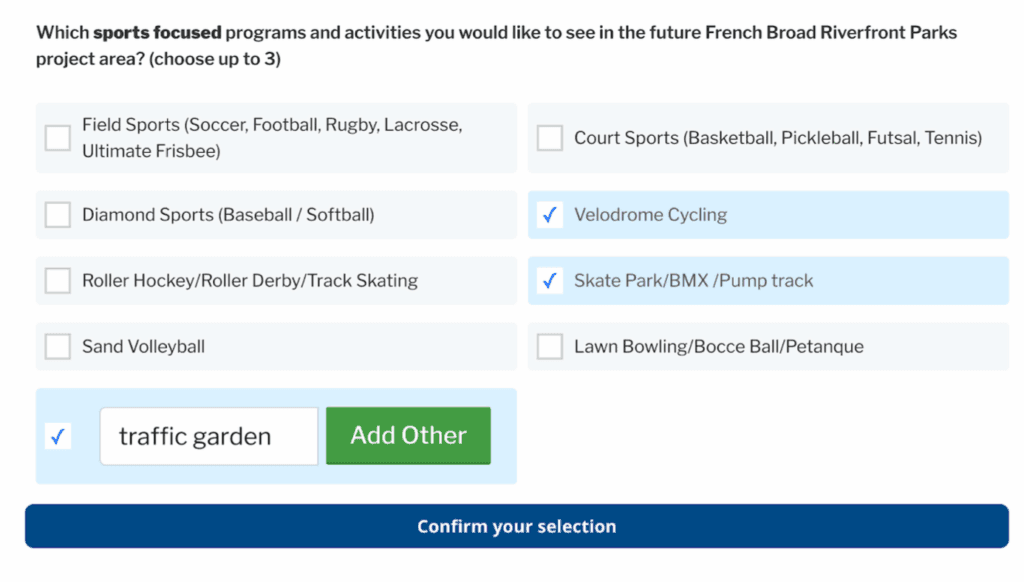
When completing the survey or providing public comment, be sure to highlight support for a variety of bicycle park facilities including trails, greenways, bike parks, traffic gardens, and fix it stations.
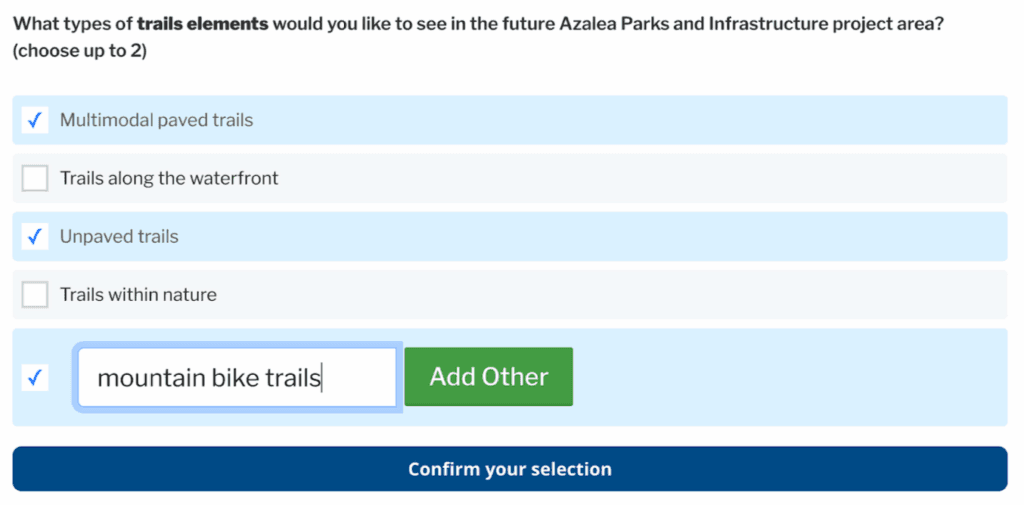
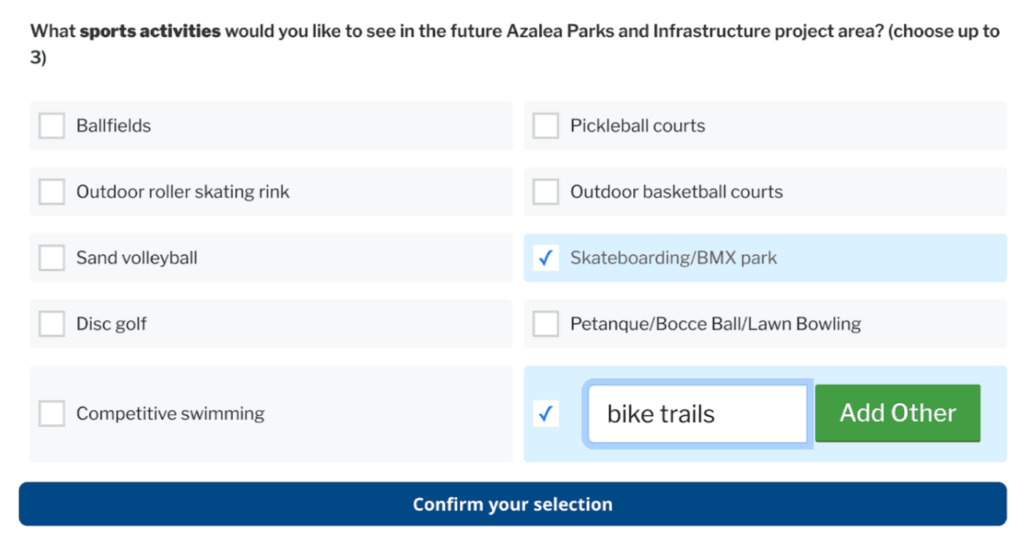
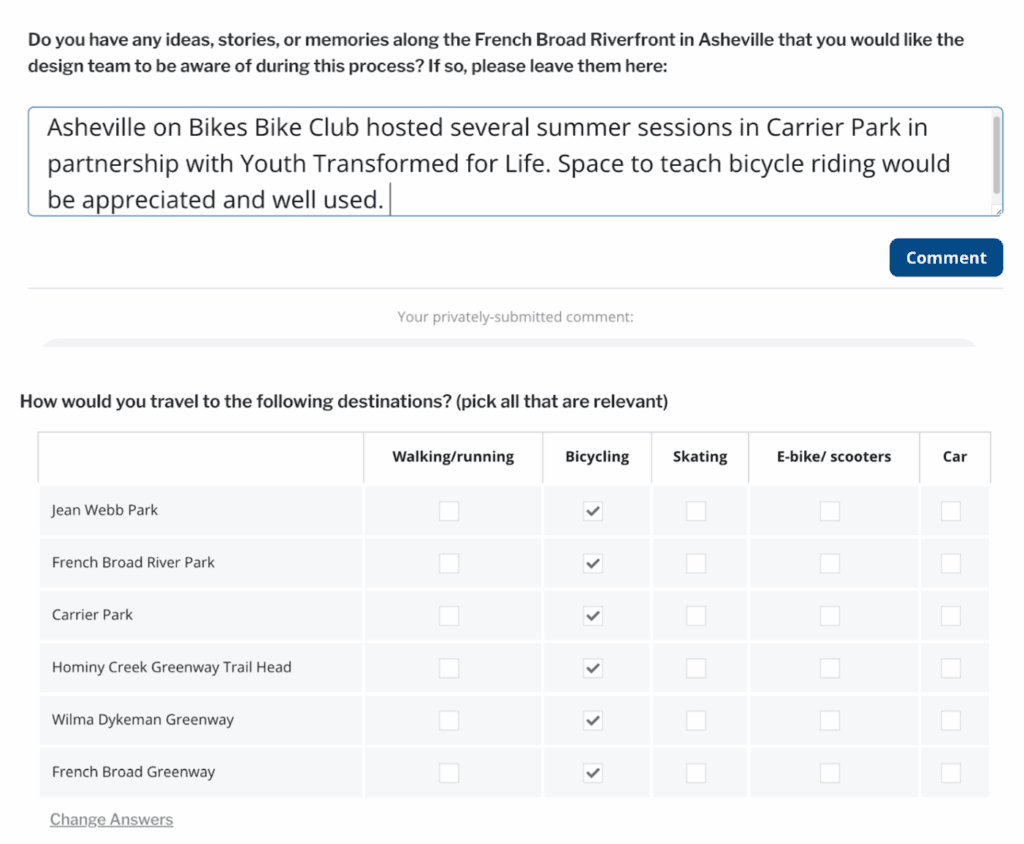
Our Vision for French Broad Riverfront Recovery
As a key stakeholder in Asheville’s active transportation network, Asheville on Bikes has submitted the following letter to Parks and Recreation Director Tyrell McGirt outlining our priorities for the recovery process.
This letter emphasizes the critical importance of prioritizing continuous greenway and trail connections along the French Broad and Swannanoa Rivers—not just as local park amenities, but as the backbone of the regional Hellbender Trail Network connecting communities across Western North Carolina. As the City makes decisions about how to rebuild, we have a once-in-a-generation opportunity to advance longstanding connectivity goals and create infrastructure that serves both immediate community needs and long-term regional vision.
Letter to Asheville Parks and Recreation
Submitted December 5, 2025
Dear Mr. McGirt,
On behalf of Asheville on Bikes, I want to express my appreciation for the work you and your team have done to reopen Asheville’s parks and recreation facilities following the recent devastation from Hurricane Helene. I recognize that the work ahead requires a careful balance of short- and long-term planning, financing, and implementation. I value both the complexity of the recovery effort and the opportunity to coordinate with the City of Asheville on the AVL Unpaved Trails project, as well as to provide input on the French Broad and Azalea Riverfront Recovery Projects.
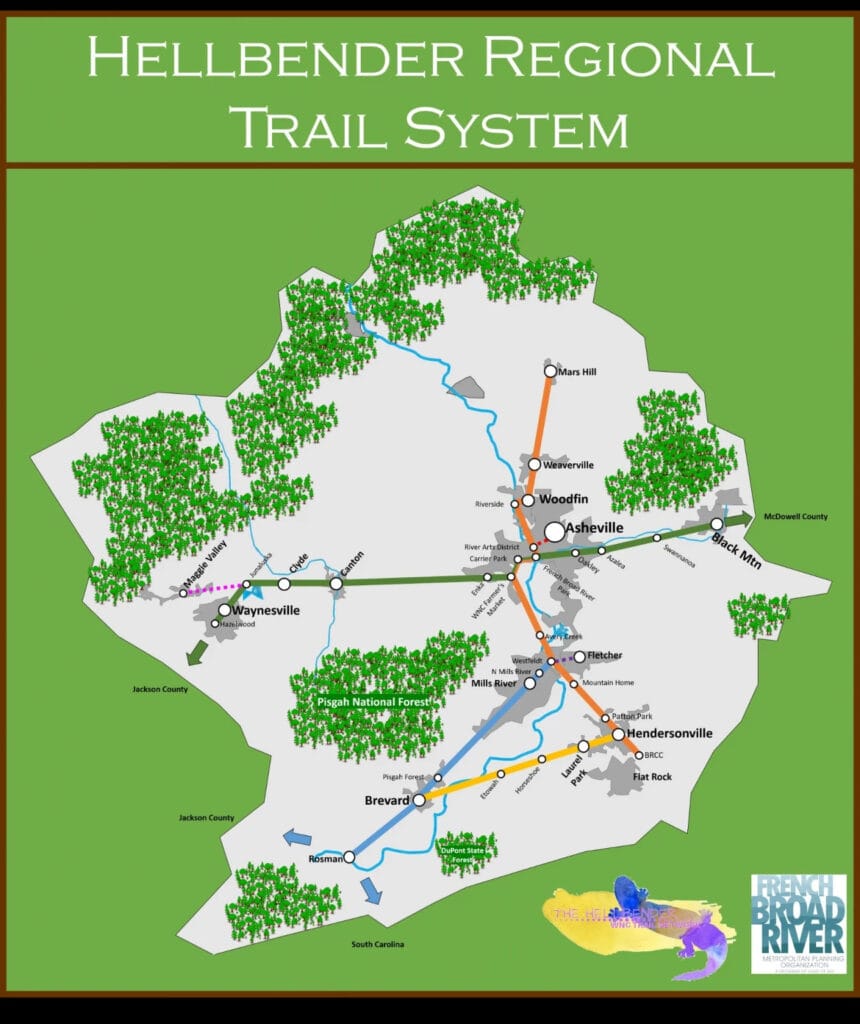
The parks and greenways along the French Broad and Swannanoa Rivers are tremendous community assets in their own right. As the riverfront is restored and reimagined, it is critical to understand this corridor as the backbone of the Hellbender Regional Trail Network (adopted in 2020 by the French Broad Metropolitan Planning Organization), which is intended to connect communities across Western North Carolina through greenways, trails, and slow streets.
The Hellbender Regional Trail Network will “knit together existing and planned infrastructure from the local level to the regional. The goal of this approach is to form a regional bicycle and pedestrian network that is more than the sum of its parts – connecting the communities of Western North Carolina and enabling a safe way for residents and visitors to explore our region on foot or bike.”
We are not just restoring Asheville’s river corridor — we are investing in the spine of a regional active transportation network that will ultimately connect communities from Mars Hill to Brevard and Waynesville to Black Mountain. Asheville is the hub of this future system, making it imperative that planning today fully considers future regional use.
With that regional context in mind, I urge the City to prioritize the development of safe and protected greenway and trail connections from the Hominy Creek Greenway to Azalea Park above other park facilities within the recovery scope. The vision for continuous greenways and trails along the French Broad and Swannanoa Rivers is longstanding. In 1989, RiverLink published the Asheville Riverfront Plan, and thirty-six years later, this primary riverfront connection remains incomplete. Most recently, the Recreate Asheville: Shaping Our City’s Parks plan reaffirmed that residents continue to prioritize investment in greenways and trails, with the Facilities and Amenities Survey identifying multi-use paved and unpaved trails as the two highest community priorities.
Additionally, the first goal identified in the “Access & Connectivity” chapter of the park’s plan is to “Create a Safe Routes to Parks program – increase the ease of access to parks” (Recreate Asheville: Shaping Our City’s Parks, p. 109). Investment in greenways and trails along the river corridors would safely connect a wide range of neighborhoods from west to east, linking one park and recreation facility to another, while also serving as a vital active transportation corridor.
Using unpaved greenways and trails can be a cost-effective strategy to maximize connectivity throughout the corridor. Priority should be given to creating continuous connections even if some segments remain unpaved.
I recommend incorporating bicycle playgrounds, pump tracks, and traffic gardens into park facilities throughout the corridor. The Richmond Hill park and its unpaved trail network provide strong local examples of how urban trail amenities can be successfully integrated into city parks. Replicating these features closer to neighborhoods and schools will greatly increase access for young people and reduce reliance on cars to reach safe, engaging riding environments.
These facilities should be designed for more than “just bikes,” as they can also accommodate skateboards, Onewheels, roller skates, and other light mobility devices. Benches adjacent to these features should consider the needs of parents and caregivers, providing comfortable places to relax and socialize while young people play.
Local organizations, including Asheville on Bikes, Pisgah Area Southern Off-Road Biking Association, Pisgah Rage, Blue Ridge Dirt Skrrts, Blue Ridge Bicycle Club, and Catalyst Sports could leverage these park features to expand programming, engage more residents, and provide educational opportunities.
Bike racks and repair stations should be included near other high-use features such as basketball and pickleball courts and restrooms, ensuring predictable and plentiful parking. Racks should accommodate a variety of light mobility devices, including adaptive bikes, e-cargo bikes, scooters, and Onewheels, encouraging active transportation to access park facilities.
Finally, artistic wayfinding and interpretive kiosks should reflect the natural and cultural history of the parks. Karen Cragnolin Park and Nasty Branch Greenway offer strong examples of interpretive signage that should inform future designs.
Asheville on Bikes stands ready to partner in this work, as evidenced by our ongoing collaboration with AVL Unpaved and other local organizations. We bring expertise in trail design, programming, youth engagement, and active transportation planning, and we are committed to supporting the City in realizing a safe, accessible, and connected river corridor that serves both Asheville residents and the broader regional trail network. We welcome continued dialogue and opportunities to collaborate on design, programming, and stewardship to ensure these park facilities achieve their full potential for the community.
Sincerely,
Mike Sule
Executive Director
Asheville on Bikes
Learn more at the French Broad Riverfront Parks Recovery and Azalea Parks Recovery project page
Mike your letter to Asville Park andRec Director was spot on. Thanks for your work.